History Repeats Itself: The Subversion of the CHP
By Halil Karaveli
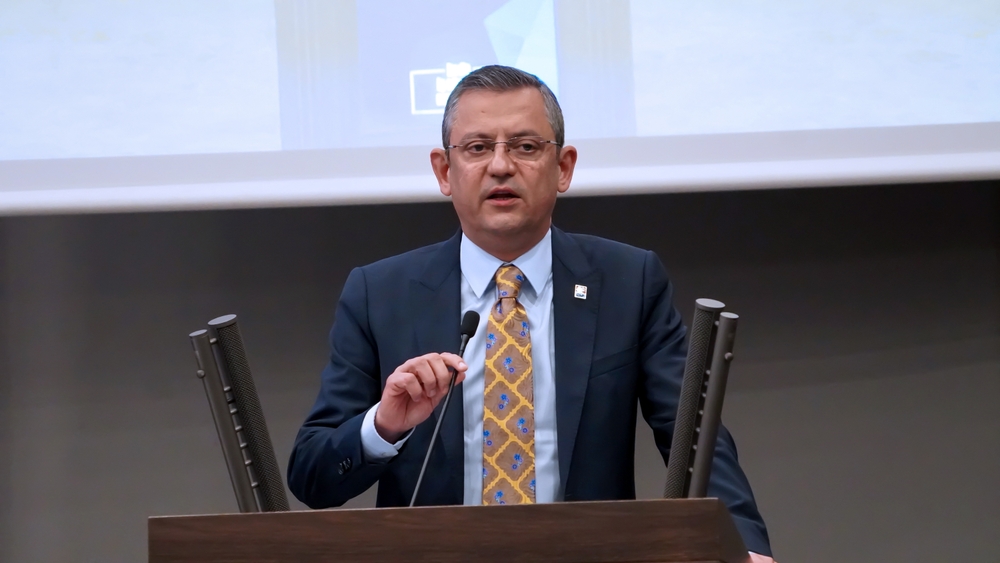
The Erdoğan regime has now introduced an innovation to the longstanding Turkish state tradition of party closures by appointing a trustee to lead the main opposition CHP. The CHP’s leader Özgür Özel was caught off-guard by the decision to depose him. His performance has been unsteady, perhaps because he senses that he has only unpromising options. Nonetheless, Özel needs to recognize that those who aspire to restore Turkish democracy no longer have any future in the CHP.
BACKGROUND:
On May 21, an appeals court in Ankara removed the head of the main opposition center-left Republican People’s Party (CHP), Özgür Özel, by annulling the party’s 2023 leadership contest. The court credited the allegations that Özel’s victory was due to irregularities and misconduct and ordered that Özel should be replaced by his predecessor, Kemal Kılıçdaroğlu, CHP’s leader between 2010 and 2023, whom he defeated in 2023. Turkish legal experts contested the legality of the court ruling, pointing out that the appeals court had overstepped its jurisdiction, since according to the Turkish constitution the Supreme Electoral Board is the sole instance invested with the authority to cancel party elections.
Yet Turkey’s justice system has been weaponised against the opposition, and the decision to depose Özel represents but the final stage in the crackdown on the CHP that began a year ago with the arrest of the party’s presidential candidate, the mayor of Istanbul Ekrem İmamoğlu. Since then, scores of CHP mayors have been arrested, charged with corruption, while others have been enticed – or blackmailed -- to switch to the ruling Justice and Development Party (AKP). As a result, the results of the local elections in 2024, which the CHP carried, have largely been voided.
The CHP has still continued to enjoy a lead, albeit a narrowing one, in the polls, while some have the party falling behind the AKP. Nonetheless, President Recep Tayyip Erdoğan seeks to make sure that his reelection isn’t endangered. Özel succeeded in keeping protesters mobilized even though a protest fatigue has eventually set in. In a sign of the growing sense of resignation, Özel’s ouster as party leader so far hasn’t elicited any wider popular protests. That’s also because the struggle over the CHP doesn’t only pit the courts of the regime against the party’s elected leadership but equally the former, now re-appointed, party head and his successor against each other, making it seem to be an internal matter of a deeply split party.
Kılıçdaroğlu has consistently refused to admit the legitimacy of the election of Özel and has since sought to return as party leader. Kılıçdaroğlu’s vengefulness and the interest of Erdoğan in seeing the main opposition party consumed with internal strife converged. On May 25, police stormed the headquarters of the CHP where Özel had barricaded himself, after Kılıçdaroğlu’s lawyers requested his and his supporters’ eviction.
Özel’s performance since the court ordered his ouster has been unsteady, alternating between defiance and futile entreaties to Kılıçdaroğlu. He initially vowed to remain at the party headquarters, solemnly declaring that “I will stay in this building, I will not leave, until the CHP’s members have decided who’s going to lead the party.” Yet two days later, when the police stormed the building, Özel acquiesced to quietly leave it.
IMPLICATIONS:
Özel was apparently caught off-guard by the decision to depose him. “I never expected that they would go this far,” he confessed, betraying a surprising naïveté about a regime that doesn’t pull any punches and that has already shown that it will stop at nothing to crush the CHP. Özel has, it seems, neither taken the full measure of Erdoğan nor of Kılıçdaroğlu, and he has clearly underestimated their determination to get rid of him.
On May 26, he appealed to Kılıçdaroğlu to call a party election in which the CHP’s 2 million members would decide who should be party leader. Kılıçdaroğlu, who was already unpopular in the party and who is now deeply loathed, will certainly not consent to holding such an election. On May 27, Özel expressed the vain hope that Kılıçdaroğlu won’t “usurp power.” Kılıçdaroğlu’s statements though intimate that he has every intention to make full use of the power that he’s been handed, and that he intends to proceed to purge the CHP of the supposedly corrupt Özel and İmamoğlu loyalists. On May 27, Kılıçdaroğlu requested that Özel be removed as CHP parliamentary group leader, a post to which Özel was hurriedly appointed after he was deposed as party leader.
Ultimately, Özel will now have to recognize that those who aspire to restore Turkish democracy no longer have any future in the CHP. So far, Özel has refused to acknowledge that reality. “We’re not going to abandon the party,” he quipped. “How could we abandon the history, the brand of the CHP to a leadership that has been appointed by the palace (a reference to the Erdoğan regime)?” he rhetorically asked. (He could also have added the party treasury that Kılıçdaroğlu now controls to that list.)
His statement suggests that Özel, incredulously, thinks that he’s got a fair chance to wrest back the party from the regime, as if the circumstances were those of a normally functioning democracy. But Özel also seems to be cognizant that normal democratic rules have ceased to apply, noting that the CHP is now “de facto closed.” In a statement that suggests that he intends to pursue his struggle by extra-parliamentary means, he said “from now on we’ll primarily be in the streets, alongside the people.” But it’s doubtful that the people will be in the streets alongside Özel.
Özel has only unpromising options: If he remains in the CHP and tries to wage a rebellion against Kılıçdaroğlu, as his statements indicate he will, he has scant chance of reversing his fortunes, and he will only end up reinforcing the image of a chaotic party that is at war with itself, which will disqualify it as a viable alternative in the eyes of many voters. That is precisely what Erdoğan wants. If on the other hand, Özel opts to leave the CHP and starts a new party, he’ll also face insurmountable, not least financial, obstacles. “We are not going to start any new party,” he insisted on May 27. Yet he may ultimately have no other option -- however unpromising it is -- if he wants to remain politically relevant.
Nor can Özel realistically hope to achieve anything by taking to the streets, as he ostentatiously did after he had complied with the police order to leave the party headquarters. Özel led party loyalists in an eight kilometer walk to the parliament under pouring rain, at one occasion climbing over an armored police vehicle and defiantly posing with a clenched fist. While some opposition commentators touted that image – reminiscent of Boris Yeltsin’s famous climb on a tank during the coup attempt in Moscow 1991 -- as iconic and held that it “captured the moment of revolutionary crystallization,” Turkey is hardly on the brink of a revolution, something of which it has no tradition. Although dissatisfaction with the economy is widespread, a majority of the voters appreciate Erdoğan’s leadership in a time of unprecedented international turmoil while the détente with the Kurdish political movement ensures that no broad opposition alliance will emerge to challenge the regime.
CONCLUSION:
In a statement in 2024, after the CHP had defeated the AKP in the local elections, Özgür Özel commented that Turkey’s history shows that whenever the state and the people are in a contest, the people always wins. There’s some truth to that. The CHP, then the party of the state, lost in Turkey’s first free elections in 1950. In 1983, the voters rejected the party that the military junta had set up as its successor. In 2007, they rallied massively to the AKP after the military had tried to block the election of the AKP’s presidential candidate. But the people’s victories have also been voided before.
In the late 1970s, the CHP’s rule was subverted by the state and big business. The CHP had by then reinvented itself as the party of the popular masses and the downtrodden and won its biggest electoral victory to date. The CHP was subsequently closed by the military together with all other parties after the coup in 1980.
The Erdoğan regime has now introduced an innovation to the longstanding Turkish state tradition of party closures – a procedure that has historically primarily targeted Islamist and Kurdish parties – by appointing a trustee to lead the party that threatened to upend the established order.
The deeper lesson that Turkey’s history imparts is that the state can only be challenged successfully from the right. The state resisted the ascent of the Islamic conservative AKP but ultimately yielded; but the AKP that rose to power as the agent of the people against the state elite in turn eventually morphed into the party of the state. The enduring fate of the CHP, which has made the opposite journey, is instead to be neutralized by the state when it’s on the ascent.
AUTHOR'S BIO:
Halil Karaveli is a Senior Fellow with the Central Asia-Caucasus Institute & Silk Road Studies Program Joint Center and Editor of the Turkey Analyst. He is the author of Why Turkey is Authoritarian: From Atatürk to Erdoğan (Pluto Press).
Visit also