By Halil Karaveli
Now, with the perceived threat from Rojava having been removed, the Turkish government has less reason to fear a Turkish nationalist backlash after meeting the demands of the Kurds, and has a free hand to re-commit to the peace process. President Recep Tayyip Erdoğan is in fact compelled to accommodate the Kurds to secure his hold on power. Meanwhile, the Kurds’ best bet is to team up with Turkey: there’s no potential foreign patron left after the U.S. abandoned them. The Kurds may eventually find it in their hearts to forgive Erdoğan; the question however is whether the Turks will empathize with the Kurds and accept them as their equals. Ultimately, society must internalize the change that the state has deemed is in its interest. Otherwise, social cohesion, and the state’s century-long quest for a stable base will continue to elude Turkey.
BACKGROUND:
A lightning offensive by Syrian government forces in late January undid over a decade of Kurdish self-rule in northeastern Syria, where the Syrian offshoot of the Kurdistan Workers’ Party (PKK), the Democratic Union Party (PYD) and its military wing, the People’s Protection Units (YPG), supported by Arab tribes – with whom the PYD formed the Syrian Democratic Forces (SDF) -- had established a proto-state since 2012. The Autonomous Administration of North and East Syria, also known as Rojava or western Kurdistan, comprised around a quarter of Syria – even though the Kurds make up less than ten percent of Syria’s population -- and included most of the country’s critical resources, oil and water.
Rojava represented the greatest achievement of the PKK in its more than four decades long struggle for an independent Kurdish state. The organization, which officially dissolved in May 2025, lost its military campaign in Turkey a decade ago and was hemmed in by Turkey in northern Iraq, from where it was no longer able to mount any military threat against Turkey. Absent continued U.S. endorsement, its statelet in Syria was no longer viable.
The Syrian government offensive followed after the United States, which had relied on the Kurdish forces to prevent the return of the Islamic State (IS) and to the chagrin of Turkey had armed and financed them made a volte-face. Tom Barrack, the U.S. special envoy to Syria, and ambassador to Turkey, stated that the rationale for the partnership with the SDF had largely expired because Damascus was ready to assume responsibility for security.
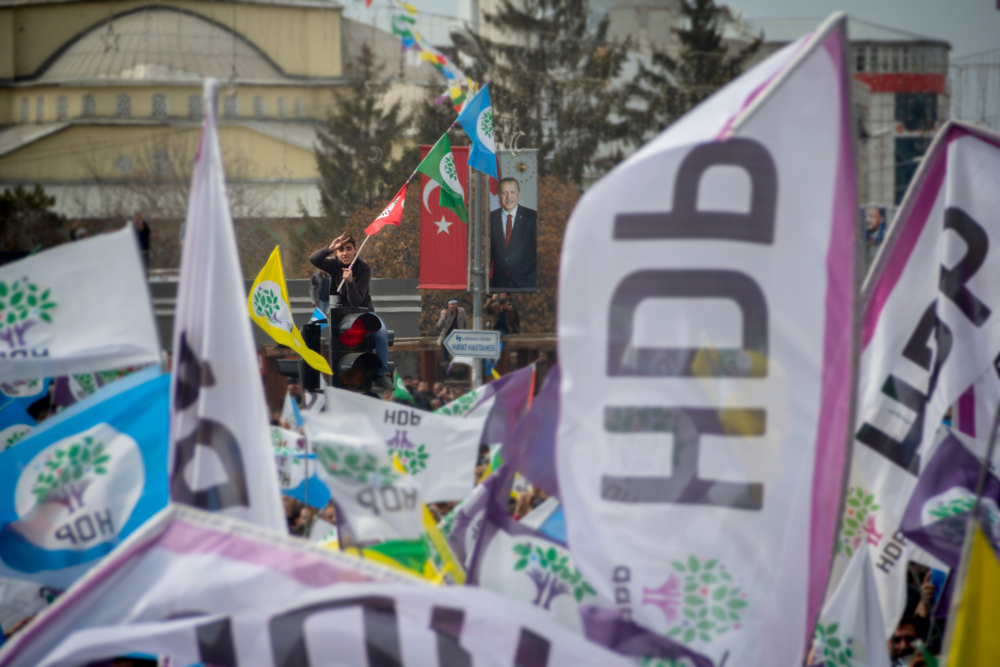
The fall of Rojava is a victory not only for the Syrian government, but also for Turkey that had seen the existence of a PKK-statelet, backed by the United States, along a 600 kilometer-stretch of its southern border as an existential threat. In December 2024, Turkish foreign minister Hakan Fidan described the elimination of the YPG as Ankara’s “strategic objective.” Nonetheless, Kurdish and pro-Kurdish politicians and activists in Turkey expressed consternation and deplored that Turkey had thrown its weight behind Syria’s Sunni Arab regime – Ankara has developed a close military and security relation with Damascus – instead of siding with the Kurds. They argue that Turkey should have taken the Kurds “under its wings” and hold that Turkey’s choice, and not least the fact that the Turkish nationalist public rejoiced at the Kurdish defeat, has caused an unprecedented “emotional rupture” among the Kurds in Turkey. Tuncer Bakırhan, the co-chair of the pro-Kurdish Democracy and Equality (DEM) Party, warned that the Kurds were now “lost” for Turkey.
IMPLICATIONS:
Yet what’s lost is rather the prospect – never openly acknowledged -- of eventually establishing a Greater Rojava, a Kurdish entity that would have re-united the Kurds on both sides of the Turkish-Syrian border. It’s easy to understand why the survival of the PKK statelet in northeastern Syria mattered to the Kurdish political movement in Turkey, and correspondingly why it struck fear in the Turkish government: the border between Turkey and Syria separates the same Kurdish communities, and the continued existence of Rojava would have emboldened the aspirations of the Kurds in southeastern Turkey to wrest self-government from Ankara.
In 2013, Turkey, fearing that the empowerment of the PKK’s Syrian offshoot would embolden the broader organization, initiated peace negotiations with the PKK’s imprisoned leader Abdullah Öcalan. As Turkey had feared, the PKK was indeed emboldened and did not commit to the peace talks, preferring to use Rojava as a base for an attempt to seize control of urban centers in Kurdish-majority provinces of southeastern Turkey, after which Turkey terminated the talks with Öcalan in 2015. The peace process that re-started in late 2024, when Devlet Bahçeli, the leader of the Nationalist Movement Party (MHP), the key ally of President Recep Tayyip Erdoğan, proposed that Öcalan could receive parole if he disbanded the PKK and renounced violence, similarly stalled when the PKK’s offshoot in Syria refused to yield territorial control and subordinate to the central Syrian government.
Now, with the perceived threat from Rojava having been removed, the Turkish government has less reason to fear a Turkish nationalist backlash for meeting the demands of the Kurds, and has a free hand to re-commit to the peace process. As long as the PKK maintained a statelet in Syria -- and enjoyed the backing of the United States -- Erdoğan could not afford to accommodate the Kurds. Although there is broad support in Turkish society for the peace process, Turks and Kurds have different expectations; while the former endorse the process as a means to end violence, the latter crave dignity and equality. Accommodating the Kurds becomes politically less costly for Erdoğan and Bahçeli after the U.S.-backed – and therefore all the more threatening -- Kurdish security challenge across Turkey’s southern border has disappeared.
On February 3, Bahçeli reiterated that Öcalan should receive parole, that the former Kurdish party leader Selahattin Demirtaş must be freed and the two Kurdish mayors Ahmet Türk and Ahmet Özer be reinstated to their posts. Meanwhile, Feti Yıldız, the deputy party leader of the MHP, stressed that Turkey must abide by the rulings of the European Court of Human Rights. The court has ruled that the imprisonment of Demirtaş violates his human rights, a ruling that Turkey has so far ignored. Bahçeli’s statements signal to the Kurds that the peace process continues, while also preparing the Turkish public for forthcoming moves.
In Syria, the fall of Rojava has precipitated a political integration of the Kurds, with President Ahmed al-Sharaa recognizing the Kurds as a constitutive element of Syria, making Kurdish an official language and appointing the first Kurdish mayor in the country’s history. Turkey experts Aslı Aydıntaşbaş and Henri Barkey – in the New York Times and Foreign Policy respectively -- argue that the integration of the Kurds in Syria offers a model for Turkey to emulate. Yet it’s less likely – at least in the shorter term – that the Kurds in Turkey will be offered far-reaching cultural rights such as the right to education in the mother tongue or will be recognized constitutionally as the co-equals of Turks.
Nonetheless, the consolidation of the regime that Erdoğan and Bahçeli have put in place requires that Erdoğan is reelected and that makes it imperative that the Kurds are co-opted. Indeed, shoring up the regime was likely always the main rationale of the opening to Öcalan. The reverence that Bahçeli shows Öcalan is intended to demonstrate respect for the Kurds. That – together with the release of Demirtaş and other Kurdish political prisoners and the planned amnesty for PKK members -- will go a long way toward healing Kurdish wounds and may well win them over and secure another term for Erdoğan.
And while Erdoğan is compelled to accommodate the Kurds to secure another presidential term, the Kurds’ best bet is to team up with Turkey: there’s no potential foreign patron left after the U.S. Statements made by Israeli officials since 2023 have made clear that the Jewish state is eager to use the Kurds as an asset against not only Iran but also Turkey, which has raised the hopes of some Kurds, but Israel would need U.S. sanction.
CONCLUSIONS:
Turkey is a nation that was created top-down, by a bureaucratic elite that set about to construct a uniform base for the new state, suppressing ethnic and cultural differences. The PKK’s four decades long insurrection was proof that the nation-building endeavor remained unaccomplished. The present, state-decreed accommodation of the Kurds is in a sense another version of the old top-down approach. The question today is if the Turkish state, which was unsuccessful in imposing a homogenous identity on a diverse population will now be able to enforce social harmony.
Because while Devlet Bahçeli can be ruthlessly pragmatic in the pursuit of the interests of the state -- like his predecessors at the helm of the Turkish republic have generally been -- ordinary Turks have been raised to think of themselves as the sole owners of Turkey; at best, they condescendingly tolerate the Kurds, at worst they view them with racist-tinged contempt. The Kurds may eventually find it in their hearts to forgive Erdoğan; the question however is whether the Turks will empathize with the Kurds and accept them as their equals. Ultimately, society must internalize the change that the state has deemed is in its interest. Otherwise, social cohesion, and the state’s century-long quest for a stable base will continue to elude Turkey.
AUTHOR'S BIO: Halil Karaveli is a Senior Fellow with the Central Asia-Caucasus Institute & Silk Road Studies Program Joint Center and the Editor of the Turkey Analyst. He is the author of Why Turkey is Authoritarian: From Atatürk to Erdoğan (Pluto Press).