History Repeats Itself: The Subversion of the CHP
By Halil Karaveli
The Erdoğan regime has now introduced an innovation to the longstanding Turkish state tradition of party closures by appointing a trustee to lead the main opposition CHP. The CHP’s leader Özgür Özel was caught off-guard by the decision to depose him. His performance has been unsteady, perhaps because he senses that he has only unpromising options. Nonetheless, Özel needs to recognize that those who aspire to restore Turkish democracy no longer have any future in the CHP.
BACKGROUND:
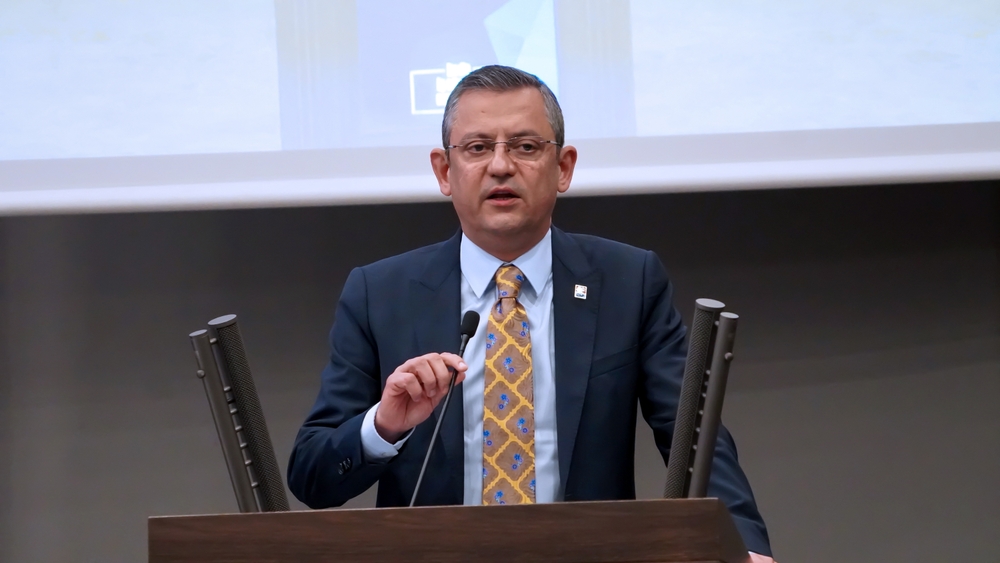
On May 21, an appeals court in Ankara removed the head of the main opposition center-left Republican People’s Party (CHP), Özgür Özel, by annulling the party’s 2023 leadership contest. The court credited the allegations that Özel’s victory was due to irregularities and misconduct and ordered that Özel should be replaced by his predecessor, Kemal Kılıçdaroğlu, CHP’s leader between 2010 and 2023, whom he defeated in 2023. Turkish legal experts contested the legality of the court ruling, pointing out that the appeals court had overstepped its jurisdiction, since according to the Turkish constitution the Supreme Electoral Board is the sole instance invested with the authority to cancel party elections.
Yet Turkey’s justice system has been weaponised against the opposition, and the decision to depose Özel represents but the final stage in the crackdown on the CHP that began a year ago with the arrest of the party’s presidential candidate, the mayor of Istanbul Ekrem İmamoğlu. Since then, scores of CHP mayors have been arrested, charged with corruption, while others have been enticed – or blackmailed -- to switch to the ruling Justice and Development Party (AKP). As a result, the results of the local elections in 2024, which the CHP carried, have largely been voided.
The CHP has still continued to enjoy a lead, albeit a narrowing one, in the polls, while some have the party falling behind the AKP. Nonetheless, President Recep Tayyip Erdoğan seeks to make sure that his reelection isn’t endangered. Özel succeeded in keeping protesters mobilized even though a protest fatigue has eventually set in. In a sign of the growing sense of resignation, Özel’s ouster as party leader so far hasn’t elicited any wider popular protests. That’s also because the struggle over the CHP doesn’t only pit the courts of the regime against the party’s elected leadership but equally the former, now re-appointed, party head and his successor against each other, making it seem to be an internal matter of a deeply split party.
Kılıçdaroğlu has consistently refused to admit the legitimacy of the election of Özel and has since sought to return as party leader. Kılıçdaroğlu’s vengefulness and the interest of Erdoğan in seeing the main opposition party consumed with internal strife converged. On May 25, police stormed the headquarters of the CHP where Özel had barricaded himself, after Kılıçdaroğlu’s lawyers requested his and his supporters’ eviction.
Özel’s performance since the court ordered his ouster has been unsteady, alternating between defiance and futile entreaties to Kılıçdaroğlu. He initially vowed to remain at the party headquarters, solemnly declaring that “I will stay in this building, I will not leave, until the CHP’s members have decided who’s going to lead the party.” Yet two days later, when the police stormed the building, Özel acquiesced to quietly leave it.
IMPLICATIONS:
Özel was apparently caught off-guard by the decision to depose him. “I never expected that they would go this far,” he confessed, betraying a surprising naïveté about a regime that doesn’t pull any punches and that has already shown that it will stop at nothing to crush the CHP. Özel has, it seems, neither taken the full measure of Erdoğan nor of Kılıçdaroğlu, and he has clearly underestimated their determination to get rid of him.
On May 26, he appealed to Kılıçdaroğlu to call a party election in which the CHP’s 2 million members would decide who should be party leader. Kılıçdaroğlu, who was already unpopular in the party and who is now deeply loathed, will certainly not consent to holding such an election. On May 27, Özel expressed the vain hope that Kılıçdaroğlu won’t “usurp power.” Kılıçdaroğlu’s statements though intimate that he has every intention to make full use of the power that he’s been handed, and that he intends to proceed to purge the CHP of the supposedly corrupt Özel and İmamoğlu loyalists. On May 27, Kılıçdaroğlu requested that Özel be removed as CHP parliamentary group leader, a post to which Özel was hurriedly appointed after he was deposed as party leader.
Ultimately, Özel will now have to recognize that those who aspire to restore Turkish democracy no longer have any future in the CHP. So far, Özel has refused to acknowledge that reality. “We’re not going to abandon the party,” he quipped. “How could we abandon the history, the brand of the CHP to a leadership that has been appointed by the palace (a reference to the Erdoğan regime)?” he rhetorically asked. (He could also have added the party treasury that Kılıçdaroğlu now controls to that list.)
His statement suggests that Özel, incredulously, thinks that he’s got a fair chance to wrest back the party from the regime, as if the circumstances were those of a normally functioning democracy. But Özel also seems to be cognizant that normal democratic rules have ceased to apply, noting that the CHP is now “de facto closed.” In a statement that suggests that he intends to pursue his struggle by extra-parliamentary means, he said “from now on we’ll primarily be in the streets, alongside the people.” But it’s doubtful that the people will be in the streets alongside Özel.
Özel has only unpromising options: If he remains in the CHP and tries to wage a rebellion against Kılıçdaroğlu, as his statements indicate he will, he has scant chance of reversing his fortunes, and he will only end up reinforcing the image of a chaotic party that is at war with itself, which will disqualify it as a viable alternative in the eyes of many voters. That is precisely what Erdoğan wants. If on the other hand, Özel opts to leave the CHP and starts a new party, he’ll also face insurmountable, not least financial, obstacles. “We are not going to start any new party,” he insisted on May 27. Yet he may ultimately have no other option -- however unpromising it is -- if he wants to remain politically relevant.
Nor can Özel realistically hope to achieve anything by taking to the streets, as he ostentatiously did after he had complied with the police order to leave the party headquarters. Özel led party loyalists in an eight kilometer walk to the parliament under pouring rain, at one occasion climbing over an armored police vehicle and defiantly posing with a clenched fist. While some opposition commentators touted that image – reminiscent of Boris Yeltsin’s famous climb on a tank during the coup attempt in Moscow 1991 -- as iconic and held that it “captured the moment of revolutionary crystallization,” Turkey is hardly on the brink of a revolution, something of which it has no tradition. Although dissatisfaction with the economy is widespread, a majority of the voters appreciate Erdoğan’s leadership in a time of unprecedented international turmoil while the détente with the Kurdish political movement ensures that no broad opposition alliance will emerge to challenge the regime.
CONCLUSION:
In a statement in 2024, after the CHP had defeated the AKP in the local elections, Özgür Özel commented that Turkey’s history shows that whenever the state and the people are in a contest, the people always wins. There’s some truth to that. The CHP, then the party of the state, lost in Turkey’s first free elections in 1950. In 1983, the voters rejected the party that the military junta had set up as its successor. In 2007, they rallied massively to the AKP after the military had tried to block the election of the AKP’s presidential candidate. But the people’s victories have also been voided before.
In the late 1970s, the CHP’s rule was subverted by the state and big business. The CHP had by then reinvented itself as the party of the popular masses and the downtrodden and won its biggest electoral victory to date. The CHP was subsequently closed by the military together with all other parties after the coup in 1980.
The Erdoğan regime has now introduced an innovation to the longstanding Turkish state tradition of party closures – a procedure that has historically primarily targeted Islamist and Kurdish parties – by appointing a trustee to lead the party that threatened to upend the established order.
The deeper lesson that Turkey’s history imparts is that the state can only be challenged successfully from the right. The state resisted the ascent of the Islamic conservative AKP but ultimately yielded; but the AKP that rose to power as the agent of the people against the state elite in turn eventually morphed into the party of the state. The enduring fate of the CHP, which has made the opposite journey, is instead to be neutralized by the state when it’s on the ascent.
AUTHOR'S BIO:
Halil Karaveli is a Senior Fellow with the Central Asia-Caucasus Institute & Silk Road Studies Program Joint Center and Editor of the Turkey Analyst. He is the author of Why Turkey is Authoritarian: From Atatürk to Erdoğan (Pluto Press).
The CHP and the Kurds: The Impasse of Progressive Politics in Turkey
By Halil Karaveli
The reconciliation with the PKK has effectively laid the ground for a de facto alliance between the right-wing AKP-MHP bloc and the ostensibly left-wing Kurdish movement. The main opposition CHP faces a difficult task. It suffers under the crackdown of the regime, is increasingly isolated and is stigmatized as the purported enemy of the Kurds by its erstwhile, “progressive” allies.

Credit: PICRYL
BACKGROUND: The Republican People’s Party (CHP) has enjoyed a lead in the polls since it dethroned the ruling Justice and Development Party (AKP) as Turkey’s leading party in the local elections in 2024. Since the election of Özgür Özel as party leader in 2023, the CHP combines an unprejudiced, inclusive stance towards conservatives with an attempt to chart a social democratic course. Just as crucially, the CHP has succeeded in appealing to Kurdish voters, notably in Istanbul, which is home to the largest concentrated Kurdish population in Turkey.
In a conversation with the Turkey Analyst in Istanbul on November 5, CHP leader Özel explained that the party’s strategy is to sway conservative voters with leftist policies that address poverty and inequality, but to do so without brandishing a leftist banner that would put off conservatives and “workers that are right-wing.”
That’s obviously a sensible strategy in a country where inequalities in wealth and income have increased dramatically during the AKP’s more than two decades in power, but where nonetheless only a minority of the population identifies as leftist. Özel recognizes that the CHP has become a pole of attraction by default as societal discontent “seeks an address.” In other countries, he noted, discontent and anger have found an address in right-wing populism and extremism. Policies must necessarily be framed in a language that speaks to all citizens. “In the fight against fascism, we need to maintain as broad an alliance as possible,” Özel stressed. Yet the prospects of maintaining -- or rather building -- such a broad democratic alliance looks increasingly unpromising in the wake of the reconciliation between the Turkish state and the Kurdish political movement.
The pro-Kurdish Peoples’ Equality and Democracy (DEM) Party and the Kurdistan Workers’ Party (PKK) -- that represent the civilian and armed wings respectively of the Kurdish movement -- are ostensibly left-wing. Selahattin Demirtaş, the former co-chair of the previous iteration of the pro-Kurdish party, known as the HDP, who has been imprisoned since 2016, in 2021 called on Turkey’s left-wing forces to form a “strong left bloc” to build democracy after the rule of the AKP. Demirtaş argued that democracy was going to elude Turkey in the absence of the left and “the voice of the labor.” Indeed, CHP leader Özel recognizes that the weakness of organized labor is a handicap. The last time the CHP was the leading party of Turkey, in the 1970s, it drew strength from a labor movement that organized 90 percent of the workforce. When Recep Tayyip Erdoğan came to power in 2003, 58 percent of the workforce was unionized; today less than 15 percent is. Removing the obstacles to unionization is going to be crucial for the future prospects of social democracy in Turkey. But more immediately, the CHP needs to retain the support of the Kurds.
Özel says that a progressive alliance – that would bring Turkish social democrats and Kurdish leftists together -- is “fine,” but that it nonetheless imports not to lose others – presumably conservatives and Turkish nationalists – “who are also oppressed.” But in any case, the Kurdish movement itself is today displaying little interest in embarking on the path that Demirtaş earlier advocated for. Demirtaş has himself since shifted course and more recently recommended that the DEM Party position itself as a third force, equidistant to the AKP and the CHP.
Meanwhile, the reconciliation with the PKK that began a year ago, when Devlet Bahçeli, the leader of the far right Nationalist Movement Party (MHP), called on the PKK’s imprisoned leader Abdullah Öcalan to dissolve the militant group and in return sensationally held out the prospect of his release, has effectively laid the ground for a de facto alliance between the right-wing AKP-MHP bloc and the Kurdish movement.
In February 2025, Öcalan called on the PKK to dissolve, a call that the organization heeded in May. However, the Turkish state has so far not responded by releasing any imprisoned Kurdish politicians; on the contrary, it has ignored the recent ruling of the European Court Human Rights to release Demirtaş. Nor has the Kurdish mayors who have been removed from their posts been reinstated. CHP leader Özel points out that Erdoğan’s “potential to deceive” is significant. Özel expressed the belief that the Kurds will ultimately “not forget what they have suffered at Erdoğan’s hands” and rally to him. Indeed, according to surveys, a vast majority of the DEM Party voters would not vote to reelect Erdoğan. Yet the calculations and motives of the Kurdish leadership are an entirely different matter.
IMPLICATIONS: The priority for the Kurdish leadership – of the DEM Party and of the PKK – is the release of Öcalan, the pardon and release of all other PKK militants in Turkish prisons and the return of the PKK leadership to Turkey where they would engage in “democratic politics.” The contours of the deal between the Turkish state and the PKK are not difficult to discern: in return for Öcalan’s freedom, the Kurdish leadership will cease to be part of the opposition – which it effectively already has -- and enable the reelection of Erdoğan. Meanwhile, the co-optation of the PKK would ensure Turkish influence in northern Syria which is controlled by the PKK’s affiliates YPG/PYD.
As the crackdown on the CHP has demonstrated – 17 CHP mayors, including the party’s presidential candidate Ekrem İmamoğlu, have been incarcerated this year – Erdoğan is intent on establishing a full-blown autocracy. Democrats in Turkey have long held that the solution of the Kurdish problem would usher in full democratization. Yet it is now clear that the Kurdish leadership is pinning its hopes on a revival of some version of the old feudal deal between the Turkish state and Kurdish tribal leaders. Under it, from the 1950s to the late 1970s, Kurdish tribal leaders were by and large left socially and economically in control of the country’s Kurdish region in return for delivering the votes of their tribes to the ruling conservative parties, the AKP’s predecessors. That was the reason the PKK began as a Marxist revolutionary movement in opposition both to Kurdish feudalism and the Turkish state. Today, ironically, Öcalan seeks to re-enact the erstwhile feudal power-sharing arrangement with the state. He has a partner in the nationalist leader Bahçeli, who Öcalan recognizes as “the voice of the state.”
In 2000 it took much persuasion by the democratic leftist Prime Minister Bülent Ecevit before Bahçeli, who then served as deputy prime minister, accepted a moratorium on the execution of Öcalan, who had been sentenced to death after he was captured in Nairobi, Kenya in February 1999 and extradited to Turkey. Today, Bahçeli goes out of his way to endow Öcalan with legitimacy. Bahçeli reverentially refers to Öcalan as the “founding leader,” in lieu of “baby slayer,” as he had until recently been called in Turkish public discourse. Bahçeli has also insisted that members of the parliamentary commission that has been set up to promote the reconciliation process visit Öcalan on his prison island İmralı. Bahçeli claimed that “visiting İmralı is not different than visiting Silivri,” the location of the prison where among others Istanbul’s mayor İmamoğlu is incarcerated, astoundingly equating the innocent political prisoners of the AKP-MHP regime with the convicted leader of a terrorist organization.
The visit to Öcalan finally took place on November 24, with parliamentarians from AKP, MHP and DEM Party, but not CHP, participating. The decision of the CHP not to participate in what amounted to an endeavor to bestow legitimacy on Öcalan, who is widely detested in Turkish society, drew the ire of the DEM Party and the PKK. The CHP argues that the elevation of Öcalan to the official representative of the Kurds jeopardizes the reconciliation process, rendering it difficult to secure public consent for steps that promote Turkish-Kurdish equality. Public support for the process has fallen from 80 percent in September to under 60 percent. DEM Party representatives have put the blame on Turkish nationalist media outlets. Pervin Buldan, a leading spokesperson of the party, reported that “Öcalan is unhappy with the media,” and called on the AKP government to take action against critics in the media, pointing out that the government enjoys discretionary power, as it controls the judiciary.
CONCLUSIONS: In a new party program, the CHP promises to promulgate the right to education in the mother tongue and to apply the European charter of local self-government. Both promises meet the demands of the Kurdish political movement. Yet Kurdish representatives slammed the CHP as the enemy of the Kurds. Tülay Hatimoğulları, co-chair of the DEM Party, accused the CHP of “reviving the codes of a century of denial and annihilation.” Murat Karayılan, a leading PKK representative, “warned” the CHP that “it will pay a price for its mistake.” Mustafa Karasu, another PKK representative, claimed that CHP has now showed that its earlier attempts to prove that the party is “the friend of the Kurds” were “insincere.”
CHP representatives recognize that their refusal to contribute to the elevation of Öcalan is bound to cost them crucial support among Kurdish voters and that the party needs to make a sustained effort to convince the Kurds of its sincerity. Yet the CHP faces a difficult task. It suffers under the crackdown of Erdoğan, is increasingly isolated and is stigmatized as the purported enemy of the Kurds by its erstwhile, “progressive” allies.
“Why should it be impossible for those who call for equality and fraternity to win a majority? Why can’t we come together and form a democratic bloc? Are we condemned to a fascist bloc?” the Kurdish leader Selahattin Demirtaş asked in November 2016, days before he was arrested. It’s the self-professed Kurdish democrats who owe the answer to those questions today.
AUTHOR'S BIO: Halil Karaveli is a Senior Fellow with the Central Asia-Caucasus Institute & Silk Road Studies Program Joint Center and the Editor of the Turkey Analyst. He is the author of Why Turkey is Authoritarian: From Atatürk to Erdogan (Pluto Press)
Local Elections Were a Loss for the AKP, Were They a Victory for the Opposition?
By Reuben Silverman
April 15, 2024
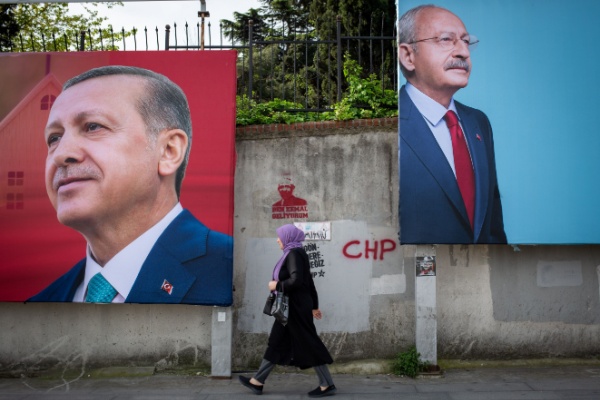
Turkey’s March 31 local elections upended national politics. As they approached, the question was whether the opposition Republican People’s Party (CHP) could retain the substantial gains it had made five years earlier. Optimists predicted that the mayors of İstanbul and Ankara would be reelected while pessimists hedged or even contemplated the CHP losing traditional strongholds like Eskişehir or İzmir. The results on election night were something else entirely. Not only were Istanbul and Ankara won easily but traditional pro-government strongholds like Bursa and Balıkesir flipped. At the national level, President Erdoğan and the Justice and Development Party (AKP) retain control of the government, but for the first time in twenty-two years, the AKP is not Turkey’s most popular political party. How Erdoğan will respond remains an open question.
Not Condemned to the Authoritarian Right: Turkey’s Local Elections Show the Way to a Different Future
By Halil Karaveli
April 11, 2024
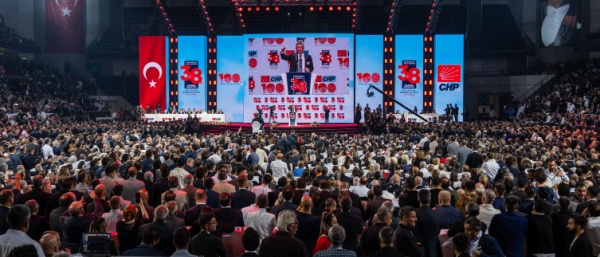
The historic victory of the social democratic CHP in the March 31 local elections has redrawn Turkey’s political map and overturned established truths about Turkish politics. Turkey is not condemned to permanent authoritarian right-wing rule. The CHP won because it combined an inclusive stance toward conservatives and Kurds with a centre-left message. But to reach national power, Turkey’s new leading party will need to show audacity and be prepared to take on entrenched economic interests.
Can the New CHP Leader Revive Social Democracy in Turkey?
By Halil Karaveli
January 25, 2024
Turkey’s new opposition leader Özgür Özel is proposing to do something that no one has attempted in Turkey since the early 1990s, to revive a social democratic alternative. Yet the CHP’s new leader is making a turn to the left under inauspicious circumstances. The right in its different shades is hegemonic and there is no societal clamor for social justice and equality. Meanwhile, the Turkish labor movement has been reduced to insignificance, depriving social democracy of a base of working class militancy. Yet rampant inequality needs to be addressed, and a left-wing message that addresses economic concerns can help transcend Turkey’s crippling ethnic divisions, encouraging Turkish and Kurdish lower classes to make common cause. It offers a way out of Turkey’s democratic impasse.
Visit also