Turkish Constitutional Court Sets Framework For Politics
By Svante E. Cornell (vol. 1, no. 16 of the Turkey Analyst)
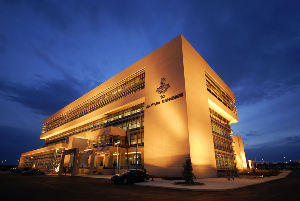
Turkey’s Constitutional Court has published its detailed reasoning in two landmark cases, in which it rejected the AKP government’s lifting of the headscarf ban in universities, and found the ruling party guilty of having undermined secularism, but stopped short of closing down the party. While the two cases have been dismissed as political, a closer reading suggests a much more complex reality. The court offers a sophisticated legal and philosophical reasoning, seeking to balance competing principles. This could suggest that the Turkish Constitutional Court is seriously beginning to step into a role as the constitutional provider of check and balances.
The Turkish Military's Puzzling Silence
By M.K. Kaya and Svante E. Cornell (vol. 1, no. 10 of the Turkey Analyst)
Turkey’s military occupies a position of influence in the country’s society and politics unseen in any other western democracy. However, in spite of a propensity to interfere in politics, the top brass has remained relatively quiet in the past year, while the driving force in the vocal opposition to the AKP government has been the judiciary. But given the growing intensity of Turkey’s regime crisis, illustrated by the July 1 arrests, it remains to be seen whether the military can succeed in staying out of this fight.
Challenging Times For Turkey's Democracy
By the Editors (vol. 1, no. 3 of the Turkey Analyst)
Turkey’s regime crisis, ongoing since 2007, has reached an unprecedented, dangerous level. If not checked, it could threaten recent advances in Turkish democracy. Indeed, the Turkish state itself shows signs of breaking up into confrontation along ideological lines. Turkey is adrift, putting extra strain on the country’s partners, the European Union and the United States. They need to reexamine their assumptions about the character of the Turkish crisis and its protagonists, and draw policy conclusions that will serve theirs and Turkey’s interests in the long term.
Turkey’s Constitutional Court: The Last Resort of Hope for the Rule of Law?

By Hendrik Müller (vol. 7, no. 8 of the Turkey Analyst)
The determination of Turkey’s Constitutional Court to fulfill its role of upholding the rule of law, in spite of this putting it at odds with the mercurial prime minister, has unexpectedly presented a check on Erdoğan’s ambitions. The recent rulings of the Court raise hopes that it can be a true bastion of the rule of law. But if the allegations that its president, Haşim Kılıç, harbors ambitions to become president of the Republic were revealed to be true, those who have called the integrity of the Court into question will appear to be vindicated. That would be regrettable.
What the Columnists Say

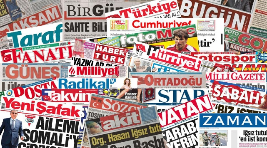
The speech that Haşim Kılıç, the president of the Turkish Constitutional Court, gave at the 52th anniversary of the founding of the court, sharply criticizing the government for the purges in the judiciary, has been widely castigated by pro-government commentators. Kılıç, a religious conservative, is condemned as a “traitor” to the cause of the Islamic conservatives. More cautious commentators observe that Kılıç has pointed to a real problem, but nonetheless make the case that Kılıç and the court needs to dispel the impression that it is taking sides in the power struggle between the government and the supporters of Fethullah Gülen.
Visit also




Joint Center Publications
Op-ed Halil Karaveli "The Rise and Rise of the Turkish Right", The New York Times, April 8, 2019
Analysis Halil Karaveli "The Myth of Erdogan's Power", Foreign Policy, August 29, 2018
Analysis Svante E. Cornell, A Road to Understanding in Syria? The U.S. and Turkey, The American Interest, June 2018
Op-ed Halil Karaveli "Erdogan Wins Reelection", Foreign Affairs, June 25, 2018
Article Halil Karaveli "Will the Kurdish Question Secure Erdogan's Re-election?", Turkey Analyst, June 18, 2018
Research Article Svante E. Cornell "Erbakan, Kisakürek, and the Mainstreaming of Extremism in Turkey", Current Trends in Islamist Ideology, June 2018
Analysis Svante E. Cornell "The U.S. and Turkey: Past the Point of No Return?", The American Interest, February 1, 2018
Op-ed Svante E. Cornell "Erdogan's Turkey: the Role of a Little Known Islamic Poet", Breaking Defense, January 2, 2018
Research Article Halil Karaveli "Turkey's Authoritarian Legacy", Cairo Review of Global Affairs, January 2, 2018