Sedat Peker and the Return of Turkey’s Violent Far Right
By Ryan Gingeras
June 17, 2021
As the Turkish public grapples with the repercussions of a crippled economy and a grinding pandemic, Turkey’s twitter-sphere, as well as much of its press, remains transfixed on the revelations of Sedat Peker. The videos reinforce certain realities regarding the Turkish state’s relationship with organized crime and with the violent far right. The impact of this reputed gangster on Turkish politics speaks to the influence of the country’s far right, which fits neatly within the country’s broader historical development since the 1970s. Peker’s videos are a reminder of the obstacle to democratization that the far right networks in the state represent.
Kurdish Mayoral Dismissals: Narrowing Political Spaces, Widening the Distance from Ankara
By Gareth H. Jenkins
September 4, 2019
The removal of the democratically elected mayors of three municipalities in the predominantly Kurdish southeast of the country and their replacement with government appointees has dealt yet another blow to Turkey’s already tattered democratic credentials. Although it is unlikely to lead to an imminent sustained increase in violence or civil unrest, by further excluding Kurds from political processes the government is exacerbating the already growing belief in the southeast that their future lies in some form of detachment from Ankara.
Defying Denial: Turkey's Kurds and the March 31 Local Elections
By Gareth H. Jenkins
March 27, 2019
Despite intense pressure from the Turkish state, including the imprisonment of a large proportion of its leadership, the Peoples’ Democratic Party (HDP) is again expected to win the majority of votes in the predominantly Kurdish southeast of the country in the nationwide local elections on March 31, 2019. But President Recep Tayyip Erdoğan’s repeated public threat to prevent HDP officials from holding office means that, for Turkey’s Kurds, the election will be less about choosing who will run their local authorities than their own identity amid a growing conviction that their future lies in a considerably looser relationship with the central government in Ankara.
The Kurdish "Other" and the American Enemy Ensure the Cohesion of Turkey's Nationalist Regime
By Cengiz Çandar
February 14, 2019
The perception of a Kurdish threat from Syria, abetted by the United States, has provided the Turkish regime with its raison d’être. It is the glue that holds the power coalition of a variety of ultranationalists together. As long as the regime of President Recep Tayyip Erdoğan relies on the Kurdish “other” for its internal cohesion – and ultimately for its survival – that imperative will continue to determine Turkish foreign policy. But Turkey’s strategic reorientation is also sustained by a long history of deep-seated suspicion of American motives. Indeed, Turkish-American relations were never harmonious and their history has taught the Turkish state elite not to trust the United States, and never before had so much been at stake as today.
Under Pressure, the PKK May Once Again Resort to Terrorism
By Matus Jevcak
September 24, 2018
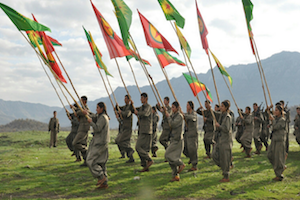
The pressure of the Turkish security forces on the Kurdistan Workers’ Party (PKK) has been growing in recent months. After moving into the Kurdish enclave Afrin in Syria, Turkish forces have entered Northern Iraq and have advanced to the proximity of the PKK’s headquarters in the Kandil mountains. Turkey has vowed to continue its counter-terrorism operations against the PKK which might once again resort to a bombing campaign in Turkish cities in retaliation. A new round of PKK bombings would inevitably deepen the existing ethnic division in Turkey.
Visit also