The AKP's Shallow "Liberalism" Exposed

By Toni Alaranta (vol. 7, no. 11 of the Turkey Analyst)
The Justice and Development Party (AKP) came to power by promising to establish a liberal-democratic regime in Turkey. The increasing authoritarianism of the Turkish ruling party and the recurrent attempts to suppress dissident voices raises the question what kind of freedom, and in what circumstances, the party advocates. There is a need to go beyond the simplistic assertion that the party suddenly changed from being liberal to authoritarian.

Changing of the Guard: Judicial Reforms Reinforce Concerns About the AKP's Increasing Authoritarianism
By Gareth H. Jenkins (vol. 03, no. 19 of the Turkey Analyst)
The restructuring of the Supreme Board of Judges and Prosecutors (HSYK), which is responsible for appointments and disciplinary procedures in the Turkish judicial system, was one of the key reforms in the package of constitutional amendments which were approved in a referendum on September 12, 2010. During the referendum campaign, the ruling Justice and Development Party (AKP) claimed that the restructuring of bodies such as the HSYK and the Constitutional Court were prerequisites for the establishment of what it termed an “independent judiciary”. The reformed HSYK held its first meeting on October 25, 2010. Yet both its composition and its initial decisions have reinforced, rather than allayed, growing concerns both about the politicization of judicial processes in Turkey and the increasing authoritarianism of the AKP.
Fusing Statism and Religious Conservatism: Is the AKP Introducing a More Formidable Version of Semi-Authoritarianism?
By Halil M. Karaveli (vol. 2, no. 16 of the Turkey Analyst)
The determination of the Turkish government to muzzle critical media is the clearest sign to date that Turkey is drifting towards semi-authoritarianism. Contrary to the expectations of its liberal supporters, the AKP is not about to dismantle statism. Fusing statism and religious conservatism, the AKP could be introducing a semi-authoritarian model more comprehensive and potentially more enduring than the defunct Kemalist model.
In the Shadow of Kenan Evren
By Halil Magnus Karaveli (vol. 1, no. 13 of the Turkey Analyst)
On September 12, 1980, the Turkish military staged a coup that was to have wide-ranging consequences. That date is indeed the defining point of recent Turkish history. The repercussions of the 1980 coup still reverberate. The dynamics of Turkish politics - the moderate Islamists assumption of power, the depreciation of secularism by the liberal intelligentsia and its alignment with Islamic conservatism - can only be properly grasped against the backdrop of what the generals accomplished during their dictatorship in the 1980s.
Washington Struggles with Turkey’s Troubles
By Richard Weitz (vo. 7, no. 4 of the Turkey Analyst)
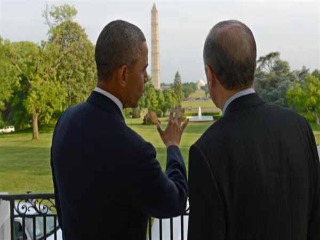
The severe domestic problems of Prime Minister Recep Tayyip Erdoğan are placing a major burden on Turkey-U.S. relations. His authoritarian tendencies and proclivity to blame everyone, including the United States, for his challenges has made it increasingly difficult for the Barack Obama administration to keep silent about his democratic and human rights setbacks. These challenges will likely only increase in coming months.
Visit also