By Halil Karaveli
Read the full article in Foreign Policy here.
In an illiberal world, the Turkish opposition can no longer convince voters that democracy alone is a source of strength.
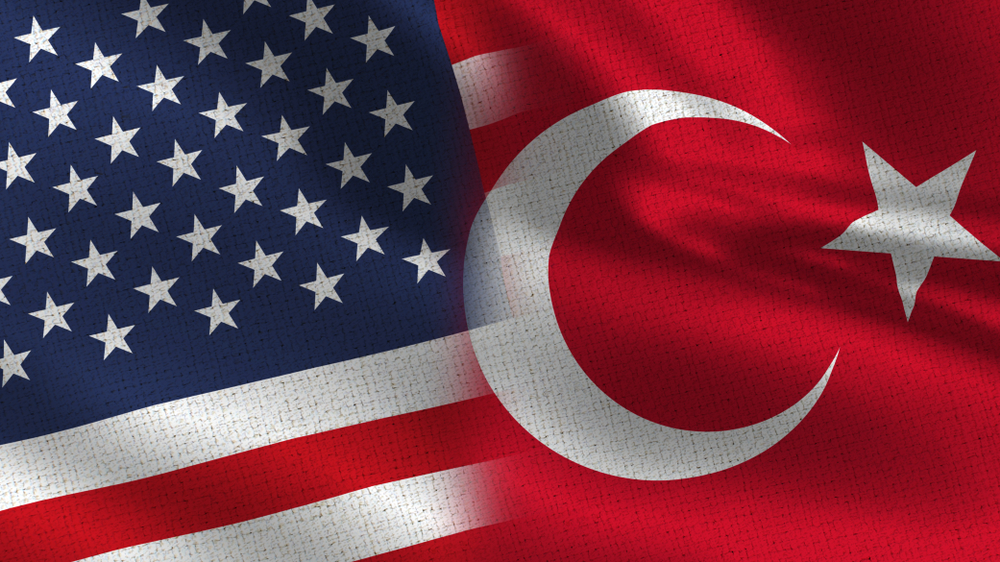
Much has been written about how U.S. President Donald Trump is pursuing an authoritarian agenda at home while embracing dictators abroad. But even this criticism does not fully capture the way he has reconfigured the global order to strengthen the logic of authoritarianism itself.
The results can be seen with regrettable clarity in Turkey, where President Recep Tayyip Erdogan is a leading beneficiary of Trump’s force-based international disorder. Erdogan has simultaneously denounced the United States and cozied up to Trump, all while personifying the national strength that Turkey relies on in an anarchic and illiberal world. Turkey’s opposition, meanwhile, is animated by an idealistic faith in the discarded liberal order and vows to abandon Erdogan’s nationalist foreign policy. Unless it reconsiders and doubles down on nationalism, Turkish voters will return to Erdogan.
Erdogan presents himself as the incarnation of Turkish aspirations for regional and global power. He has long advocated for a multipolar global order not dominated by great powers, saying, “The world is bigger than five”—a reference to the permanent members of the United Nations Security Council. In pursuit of this vision, Ankara has cultivated strong relations with Venezuelan President Nicólas Maduro. When Maduro was captured by U.S. forces in January, Erdogan’s chief advisor, Mehmet Ucum, stated, “There is no option other than power-based struggle against imperialist aggression.”
At the same time, Erdogan has also acted as an acquiescent Trump ally who is keen to cooperate with the United States when it serves his purposes. Thus, as his advisor condemned imperialist aggression, Erdogan himself abstained from expressing any criticism of the Maduro raid. After a conversation with Trump on Jan. 27, Erdogan said, “We will continue to develop the cooperation between the United States and Turkey,” adding, “It’s in our common interest that the relations progress in all areas.” Turkey accepted the invitation to join Trump’s Board of Peace, while most NATO allies declined.
The relationship that Erdogan enjoys with Trump provides Turkey with opportunities to promote its national interests in tandem with the United States. According to a recent survey by the European Council on Foreign Relations, only 11 percent of Turks see the United States as an ally with whom they share values, but 42 percent see it as a necessary partner, with whom Turkey must strategically cooperate.
This opportunistic approach helps Erdogan make Turkey into a significant geopolitical actor, capable of projecting military and economic power from the Middle East and the Balkans to Africa and Central Asia. Disparaged by critics as an expression of imperial delusion, the extension of Turkish influence is a source of national pride and an unquestionable asset for Erdogan in today’s uncertain world.
What’s more, changing international conditions have increasingly fused the case for projecting power internationally with Erdogan’s case for projecting power in domestic politics.
Continue reading the full article in Foreign Policy here.
AUTHOR'S BIO: Halil Karaveli is a senior fellow with the Central Asia-Caucasus Institute & Silk Road Studies Program Joint Center. He is the author of Why Turkey is Authoritarian: From Ataturk to Erdogan.